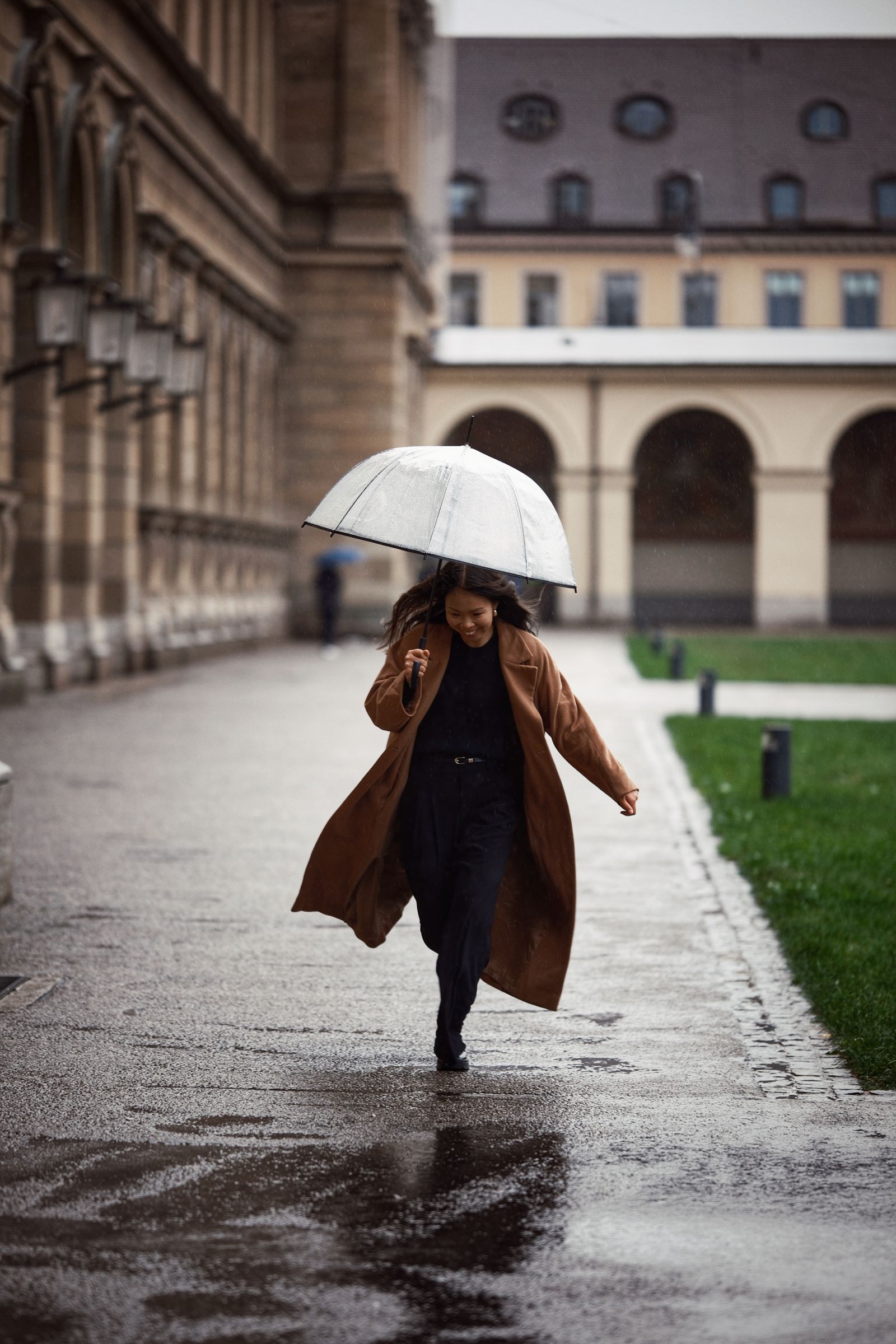
Rainy-day dressing is easier when you plan for the journey, not just the destination. Check the forecast, how long you will be outside and whether you need to carry items that must stay dry.
Choose the right outer layer
A water-resistant finish and a waterproof construction are not interchangeable terms. Read the manufacturer’s specifications for the actual garment and look at details such as seams, closures and hood coverage. An umbrella can be useful, but wind and crowded streets may make it less practical. REI’s layering guidance explains the role of a weather-protective outer layer in an outdoor clothing system.
Think about your route
Select shoes appropriate for wet surfaces and check the maker’s guidance: ordinary leather or a thick sole does not automatically mean a shoe is waterproof or slip-proof. Keep important electronics protected in a suitable bag or pouch. A shorter trouser hem may be practical if you are walking through puddles.
Dry and maintain afterwards
Follow the care label and let damp clothing and shoes dry as directed, away from excessive heat. Some technical outerwear has specific cleaning and treatment instructions; Patagonia provides examples for its own products, which should not be applied automatically to other brands. Comfort, visibility and safe footing matter more than a perfect outfit.